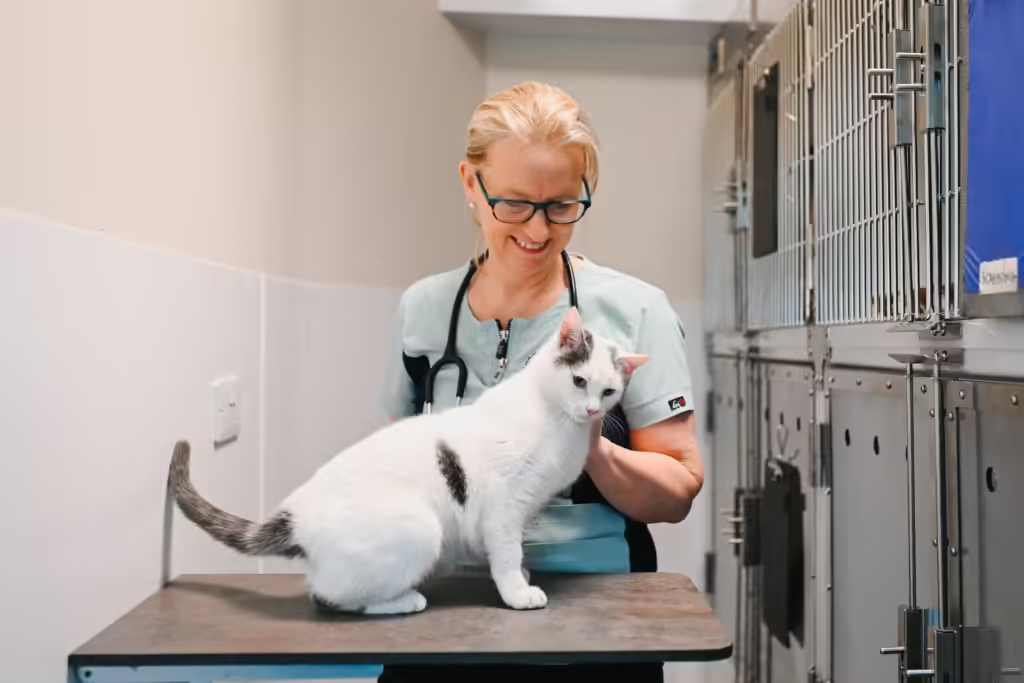
You notice your dog is slowing down on their walks. Or your cat seems to be breathing heavier when they sleep. Or they are acting like nothing is wrong. All of these could be signs of heart disease.
Heart disease effects approximately 10% of all dogs and cats seen in veterinary practice, and that prevalence rises as the animal ages. This encompasses congenital conditions like holes in the heart, degenerative problems such as valvular disease, or heart condition which may be linked to other illness like hyperthyroidism.
A common misconception is that only older animals get heart disease – young animals are not immune to the problem. If an animal with heart disease is left undiagnosed and untreated, there is a risk of Congestive Heart Failure occurring, which can be fatal. Unfortunately, as our pets are excellent at acting normally despite being unwell, we may only start to notice signs of illness once their hearts are already failing. Early identification is key to improving longevity.
So how do we know if your animal has heart disease?
It all starts with a consultation, and it is recommended you visit your vet at least annually for a check-up. The most common sign is hearing a murmur when listening to your pet’s heart. A murmur is a sign of abnormal blood
flow through the chambers of the heart, and is caused by a defect in the ability of the heart to function as normal. We grade murmurs by their location in the heart and their loudness. We may also check your pet’s pulses to check that they are strong and sync with the heart rate.
Listening to your animal’s chest and checking their breathing rate and effort will help us determine if we are starting to get congestive heart disease occurring.
Depending on the findings in a consultation, we might recommend investigations. This could include bloods, an ECG and an echocardiogram (heart scan). This is an in-depth ultrasound looking at the heart chambers, the vessels they supply, and the valves that help the heart function normally. In most pets, we can do this scan without sedation, but some wriggly patients need some medical assistance to sit still! The scan takes about 1 hour, and following this we can come to some conclusions about your pet’s heart, if they need to start on medication, or if they need monitoring as they age.
This month at Ledbury Park Vets is our Murmur Month, raising awareness of the severity and prevalence of heart disease in our pets. As part of this, we are offering a FREE Murmur Month consultation with a vet during our “Screening Weeks” of the 2nd- 14 th March, to check
your pet’s heart. If there is anything of concern identified, we are also offering £100 off heart scans with Natasha, our vet who holds a Diagnostic Imaging Certificate, with an ECG included. An early diagnosis can help pets live better for longer, and we want to support
owners to do that for your animals.